

 01
The essentials
Third party only
Covers your legal liability for injury to other people and damage to their property. It does not pay to repair your own vehicle after an accident.
FOR THE VAN THAT GETS IT DONE
Van insurance
From call-outs to deliveries, explore cover for your working van.
Get a quote Explore the cover
 Your van.
COVER, WITHOUT THE CONFUSION
Van insurance protects against specified risks involving your vehicle, with the protection depending on your cover level and policy terms. If you drive on UK roads, you need at least third-party motor insurance. A business van policy also needs to allow the work you actually do.
Start with two separate decisions: the level of protection for the van, and the way it will be used. A comprehensive policy with the wrong class of use can still leave you with a problem when you need to claim.
UK motor insurance requirementsTHREE LEVELS. A CLEARER CHOICE.
The cover level is only part of the picture. Always compare excesses, exclusions and the uses allowed by the policy.
01The essentials
Covers your legal liability for injury to other people and damage to their property. It does not pay to repair your own vehicle after an accident.
 02
A little more protection
Adds cover for your own vehicle if it is stolen or damaged by fire, alongside third-party protection. Accidental damage to your own vehicle is not included.
 03
Broader vehicle protection
Adds accidental damage cover for your own vehicle as well as third-party, fire and theft protection. Excesses, limits and exclusions still apply.
| Protection | Third party | Fire & theft | Comprehensive |
|---|---|---|---|
| Liability to other people | Included | Included | Included |
| Fire or theft of your vehicle | Not included | Included | Included |
| Accidental damage to your vehicle | Not included | Not included | Included |
Subject to policy terms, excesses and exclusions. The correct class of use still needs to be selected.
Availability and policy features vary. Comprehensive cover does not mean every risk is included.
BUILT AROUND YOUR WORKING WORLD
A trip to a job, a weekend away and a paid delivery are different uses. Describe them accurately when you arrange cover.
For personal journeys, shopping and leisure. Driving to a regular workplace may need commuting cover as well; check how the insurer defines it.

For tradespeople carrying their own tools, materials or equipment between jobs. This describes the use of the vehicle; it does not automatically insure everything inside.

Carrying other people’s goods for payment can require carriage of goods for hire and reward. Courier, haulage and food delivery work need to be declared specifically.
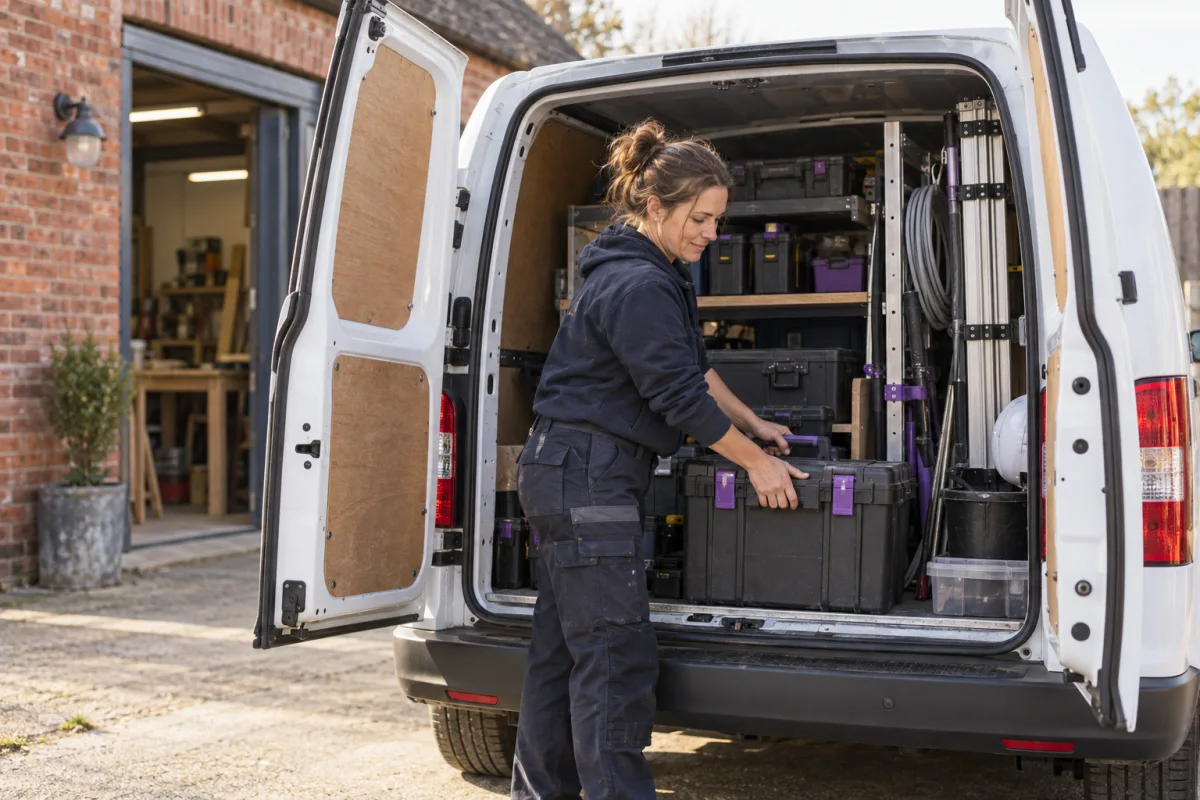 Ready for the day ahead.
THE PEOPLE BEHIND THE WHEEL
A named-driver policy lists the people allowed to drive. Any-driver cover can offer more flexibility, but usually still has age, licence and other eligibility restrictions. Never assume that “any driver” means absolutely anyone.
For a growing team, compare the practicalities of adding drivers with the cost and conditions of a more flexible policy. If you run several vehicles, fleet insurance may also be worth exploring.
Explore fleet insuranceWHAT GOES INTO YOUR PRICE?
There is no single price for every driver or every van. Insurers look at the vehicle, the people driving it and how it is used.
 01
Its value, model, age, size, modifications and repair costs.
 02
Driver ages, licences, experience, claims and motoring convictions.
 03
Annual mileage, business activities and the class of use you need.
 04
Your postcode, overnight parking and the security fitted to the van.
Compare the total price alongside the excess and cover. A larger voluntary excess may reduce a premium, but only choose an amount you could afford to pay following a claim.
THE EXTRAS THAT MATTER
These protections may be optional or need a separate policy. Check what is actually included before you buy.
 Tools & equipment+
Check item limits, forced-entry requirements and overnight storage conditions. Do not assume a motor policy covers a full van of tools.
 Breakdown assistance+
Look at recovery distance, home start and whether assistance covers the van’s size, weight and business use.
Replacement vehicle+Check whether a replacement van is included, its size and the circumstances in which it is provided. A courtesy car may not keep your work moving.
Goods in transit+If the goods you carry need protection, ask about separate goods-in-transit cover and the relevant value limits and exclusions.
READY WHEN YOU ARE
Use accurate estimates and declare changes such as racking, signwriting or different work activities. If you are unsure whether something matters, ask before arranging cover.
Get organised.GOOD QUESTIONS. STRAIGHT ANSWERS.
You need a policy that permits your actual use of the van. If you travel between jobs, carry tools or make deliveries, tell the insurer. Private use, commuting and different kinds of business use are not interchangeable.
Not automatically. Some policies include limited tools cover and others offer it separately. Check the sum insured, single-item limits, theft conditions and whether tools may be left in the van overnight.
Yes, private van insurance may be suitable for personal journeys. If you also commute or use the van for work, make sure those uses are included rather than selecting personal use alone.
Many policies let you add named drivers, subject to the insurer accepting them. The price and excess may change. Any-driver options can have minimum ages and other restrictions.
Not necessarily. Prices depend on the insurer’s assessment of the risk, not just the cover label. Compare the available options and their excesses rather than assuming third-party cover costs less.
Cover may be available, subject to the insurer’s criteria. For an electric van, check battery and charging-related terms. For a leased van, check the lease agreement’s insurance requirements and declare the registered keeper and owner accurately.
Some insurers may accept eligible no-claims history from a car, while others apply different rules. It generally cannot be used on two active policies at the same time. Ask about acceptance and the evidence required.
Any time. Use the Get a quote button to answer a few quick questions about your business and the cover you need, and one of our team will call you back with a price. These guides explain the choices and information to consider before that call.
A LITTLE MORE CLARITY
Further reading: ABI commercial motor guide · MYB Help Centre
BACK TO WHAT YOU DO BEST
Get to know your cover. Get back to your working day.
Get a quoteAnswer a few quick questions and we’ll call you with a price.